

Quick Highlights
- Check engine oil and coolant levels regularly.
- Inspect brakes before buses begin daily trips.
- Monitor tyre pressure and tread condition closely.
- Repair electrical faults before they affect safety.
- Follow the manufacturer's recommended servicing schedule.
- Buy suitable spare parts from trusted suppliers.
- Train drivers to report unusual vehicle behaviour.
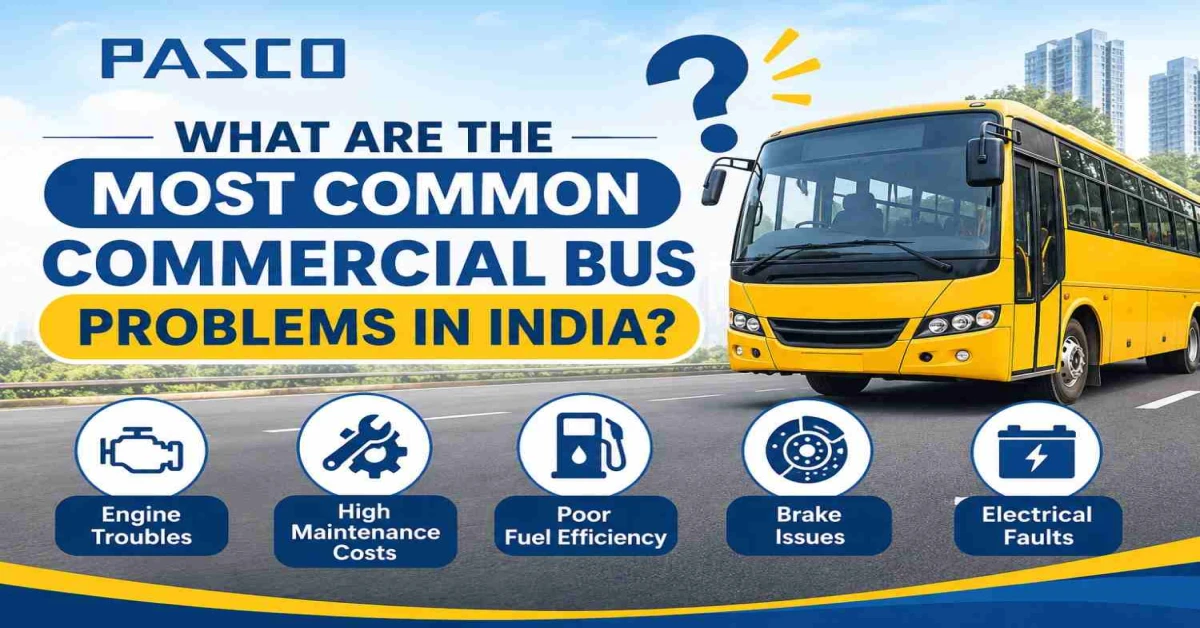
Have you ever wondered why commercial buses break down during long journeys or busy working hours? Commercial bus problems in India can affect passenger safety, travel time, fuel use, and daily operations. Even a small mechanical fault can cause serious trouble for bus owners and operators.
They cover long distances and face different road and weather conditions. They also carry heavy passenger loads and spend long hours on the road. These conditions can put extra pressure on several vehicle parts.
Bus operators face different technical and maintenance issues from engine trouble to brake failure. If found, they should find a Tata bus showroom near me.
Getting familiar with these problems helps drivers, fleet owners, and transport companies take timely action.
What Are the Most Common Mechanical Problems in Commercial Buses?
They often face engine, brake, clutch, gearbox, suspension, and tyre problems. These parts work under regular pressure during daily transport operations.
Some common mechanical problems are -
Engine overheating
High temperatures can affect engine performance. Low coolant levels, radiator leaks, blocked air passages, or a faulty cooling fan can cause overheating.
Brake failure
Worn brake pads, damaged brake lines, low brake fluid, or air leaks can reduce braking power. Drivers should never ignore unusual brake sounds.
Clutch problems
A worn clutch plate can cause slipping or difficulty with gear changes. Drivers may also notice a burning smell or poor pickup.
Gearbox faults
Damaged gears, low transmission oil, and worn parts can cause hard gear shifts. These problems can make driving difficult.
Suspension damage
Worn shock absorbers, damaged springs, and loose joints can affect ride comfort and vehicle control.
Tyre damage
Low air pressure, uneven wear, cuts, and poor wheel alignment can increase tyre failure risks.
Why Do Commercial Buses Face Electrical and Battery Problems?
They are common commercial bus problems in India, especially in vehicles with long daily operating hours. These faults can affect starting, lighting, cooling, and other electrical functions.
A commercial bus depends on several electrical parts. These include the battery, alternator, starter motor, wiring, fuses, and sensors.
Some electrical issues are -
Weak battery
An old or damaged battery may not provide enough power to start the engine.
Alternator failure
A faulty alternator may fail to charge the battery during vehicle operation.
Starter motor faults
A damaged starter motor can cause slow or failed engine starts.
Wiring damage
Loose connections, damaged wires, and poor insulation can interrupt electrical supply.
Lighting problems
Faulty headlights, brake lights, and indicators can create serious safety risks.
Sensor faults
A damaged sensor may send incorrect information to the vehicle control system.
How Do Road Conditions and Weather Affect Commercial Buses in India?
Indian road conditions and changing weather can increase wear on commercial buses. Rough roads, potholes, traffic, heat, dust, and heavy rain can affect different vehicle systems.
Some normal road and weather-related problems are -
Suspension wear
Frequent movement over potholes can damage shock absorbers, springs, and suspension joints.
Tyre damage
Sharp road edges, broken surfaces, and incorrect tyre pressure can cause cuts or uneven wear.
Engine overheating
High outdoor temperatures can put extra pressure on the cooling system.
Water damage
Deep water can affect electrical connections, sensors, and other components.
Rust and corrosion
Moisture can damage metal parts, body panels, and exposed connections over time.
Reduced visibility
Heavy rain, fog, and dust can affect visibility and increase driving risks.
How Can Bus Owners Prevent Common Commercial Bus Problems?
Regular servicing and timely repairs can reduce common commercial bus problems in India. Bus owners should follow the vehicle manufacturer's service schedule and check important parts at suitable intervals.
A planned maintenance routine helps operators identify faults before they cause major breakdowns. It also helps drivers understand the vehicle's condition.
The following steps can help bus owners manage maintenance -
Check the engine regularly
Inspect engine oil, coolant, belts, hoses, and filters. Look for leaks, unusual sounds, and changes in engine performance.
Inspect the brakes
Check brake pads, discs, drums, brake lines, and air pressure systems. Replace worn parts as recommended.
Monitor tyre condition
Check air pressure, tread depth, wheel alignment, and tyre wear. Follow the tyre manufacturer's guidance.
Test the battery
Check battery terminals, charging performance, and electrical connections. Replace weak batteries when required.
Service the cooling system
Inspect the radiator, coolant level, hoses, and cooling fan. Clean blocked radiator surfaces as needed.
Check the suspension
Look for damaged springs, loose joints, and worn shock absorbers. Pay attention to unusual vehicle movement.
Maintain service records
Record repairs, inspections, part replacements, and service dates. These records help track recurring faults.
What Should You Check Before Buying Commercial Bus Spare Parts?
Choosing suitable spare parts is essential for safe and reliable bus operation. The wrong part can cause poor performance, repeated repairs, or further damage to the vehicle.
They should match the vehicle's make, model, engine type, and specific requirements.
Keep these points in mind before buying replacement parts -
Vehicle compatibility
Check the part number and vehicle details before placing an order.
Part quality
Choose parts from trusted manufacturers or authorised sellers.
Material and build
Check the material, finish, and overall condition of the part.
Supplier details
Buy from sellers who provide clear product information and proper bills.
Warranty terms
Check the warranty period and conditions before purchasing.
Installation needs
Ask a qualified mechanic to confirm the correct fitting method.
Final Words
As suggested by a Tata Motors authorized dealer in Ambala, common commercial bus problems in India include engine faults, brake issues, electrical failures, tyre damage, and suspension wear. Poor roads and irregular servicing can increase these risks. Bus owners should follow regular inspection schedules and use suitable spare parts. Timely repairs help protect passengers, reduce breakdowns, and keep daily bus operations safe.
FAQS
What is the most common reason for commercial bus breakdowns?
They often happen due to poor maintenance, engine faults, brake problems, battery failure, or damaged tyres. Regular vehicle checks can help prevent sudden breakdowns.
How often should commercial buses undergo servicing?
They should follow the service schedule recommended by their manufacturer. The service interval may depend on mileage, engine type, road conditions, and daily usage.
Why does a commercial bus engine overheat during long trips?
It may overheat due to low coolant, radiator blockage, coolant leaks, or a faulty cooling fan. Drivers should stop safely and arrange a proper inspection.
Can poor road conditions damage commercial bus parts?
Yes, rough roads and potholes can damage tyres, suspension parts, wheel alignment, and the vehicle's underbody. Regular inspections can help detect such damage early.
How can bus owners identify the right spare parts for their vehicles?
They should check the vehicle model, make, engine type, and part number before buying spare parts. They should also choose quality parts from trusted suppliers.




 (1)_500_x_350.webp "10 Essential Lubrication & Fluid Management Tips for JCB Machines")
 (1)_500_x_350.webp "How Earthmoving Equipment Helps in Railway Track Construction?")


